Reg, veg and community spirit

When Reg Curnock came out of the army in 1958 he and his wife moved into a house on a dirt track just outside Oxford. He started growing vegetables for his growing family, while all around his vegetable patch, streets and houses sprouted up. They were to provide homes for workers in the new car factory going up in Cowley.

Reg has seen the car industry rise and fall in his many decades on what became the Blackbird Leys Estate. And more recently everyone on the estate is feeling the pinch of the recession. Reg feels that he’s seen the “sense of community” fall too, and says the drug dealing that now goes on means the old people “keep themselves to themselves”.

But last night the community spirit was reasserting itself. Perhaps not exactly the community that Reg was used to, but a new kind of community blending black, white, Polish, English, young, old and middle aged. And Reg himself. What they all had in common was a purpose. They had gathered to discuss, over a shared meal, plans to start a community market on the estate. The organisers of the event had been gathering people’s views on the idea.

To the first question, “Does Blackbird Leys need a market?”, there was a resounding and unanimous Yes.

To the second question, “Why?”, two answers predominated. One, to provide a source of fresh vegetables to people on the estate and two, to bring the community together.

What did people want to buy at the market? Overwhelmingly, fresh fruit and veg. What would they be willing to sell? Alas, mostly cakes!

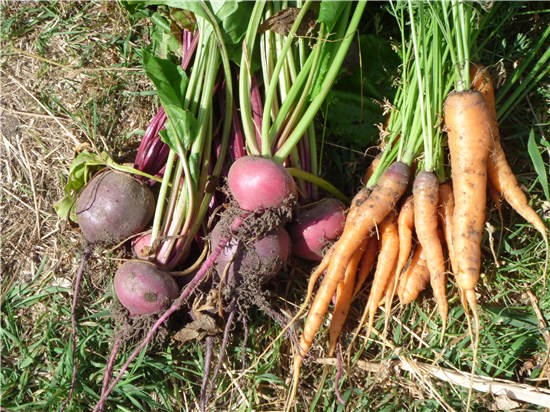
But fortunately Reg and his fellow members of the Blackbird Leys Allotment Association, were there with plans to provide the vegetables. And the fruit and herbs and flowers and seeds and seedlings…  As a father of six, whose grandchildren were weaned on his pureed vegetables, Reg knows the value of fresh produce. His wife used to keep track of what he grew and what it would have cost to buy in the shops. She calculated that they saved £18 a week in the 1970’s. “Imagine what that would be worth now,” he says. (Thanks to this rather handy website, I can tell you that £18 in 1975 would be worth £185 now using average earnings!)

At each table, over freshly cooked baked potatoes, vegetable stew and salad, we discussed ideas for the market and wrote them on post-it notes. Our excitement grew as the ideas flowed, bouncing off each other and getting more and more ambitious. Could we recreate Paul’s thrilling childhood memory of when the cast of the Planet of the Apes arrived in full costume on horseback to entertain him and the other kids at an earlier market?!

“But what makes me really angry,” said Paul, “Is Mother’s Day. On the Tuesday a bunch of flowers will be £3.99, and come Friday it will be £7.99! And that’s kids they’re taking that money from. We could grow flowers on our allotments and even if we sell them for a pound a bunch we’d still be making something, and the kids wouldn’t be being ripped off.”

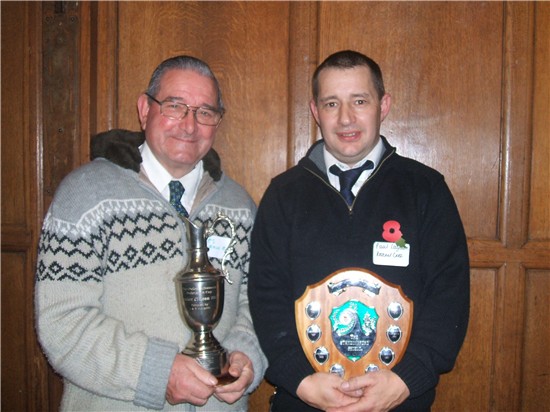
Reg, who was last year’s winner of the Oxford Allotment Competition, suggested that as well as selling fruit and veg, they could provide advice to help people grow their own. They could sell seeds and show people that you could save your own seeds to plant the following year instead of buying new ones. This might not sound like good entrepreneurship on Reg’s part – but it sounds like a lot like community spirit. Long may it live.

Photos from the Blackbird Leys Allotment website. Reg is the one on the left.
This time it’s personal… (yet strangely mundane)

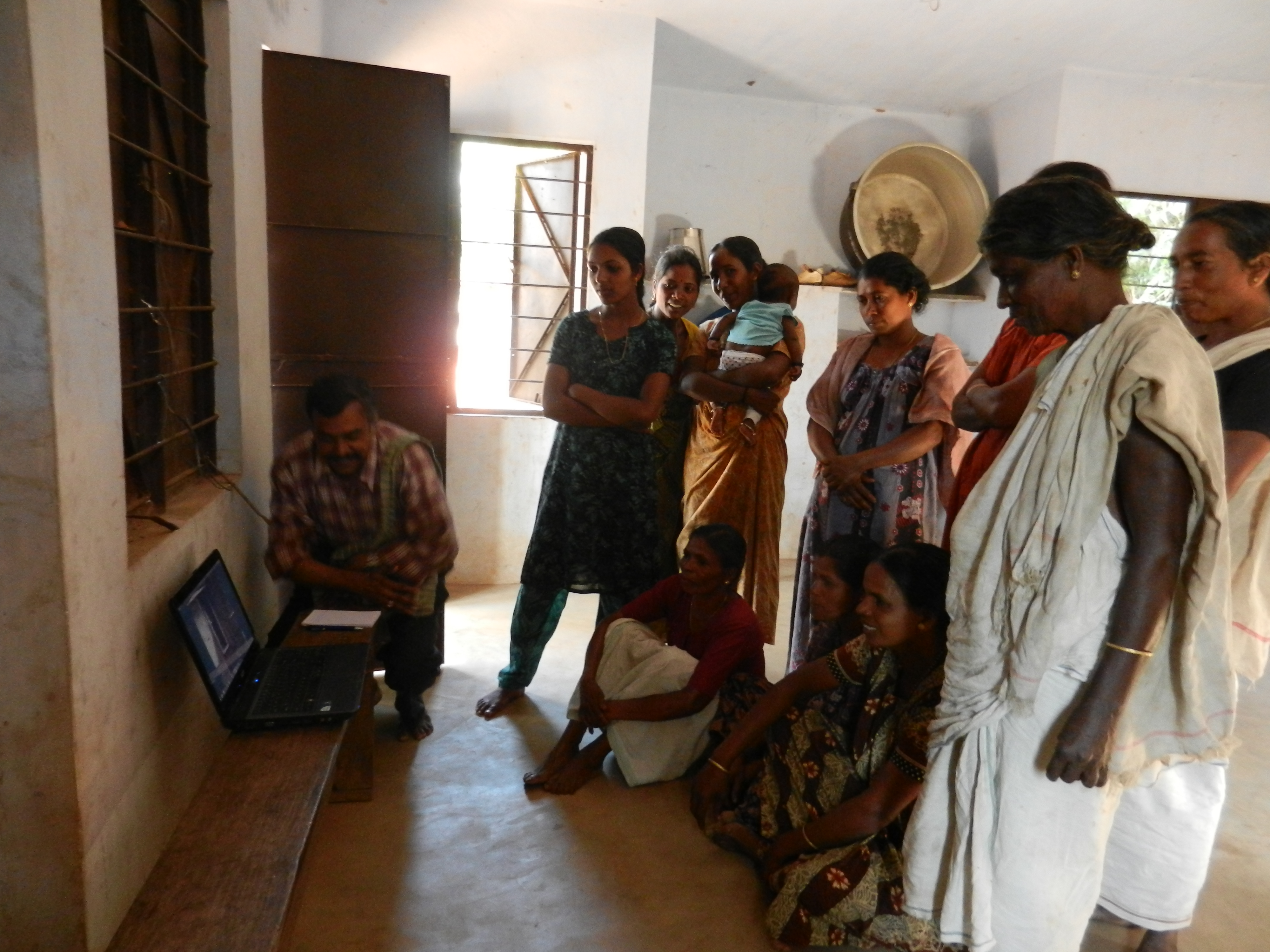
Tea growers in Theyakkuni watching a film of women in Oxford who are part of their Just Change community trading network.

Last night I was utterly gripped by a TV programme called Britain in a Day. It showed snippets of films made by ordinary people all over Britain on a single day; November 12th 2011.

There were no characters to get to know, there was no plot, no argument to follow… It was just little fragments of life as they happened. I cried, laughed, tutted, yawned, reached for the remote, stopped, cried again, laughed again… as things like this happened; a man proposed to the mother of his children – she screamed and screamed with joy, a girl interviewed her Nan about her terminal illness, a boy said how safe he felt in Britain because there were no wars, natural disasters or poisonous insects, mothers and fathers read bedtime stories to their kids, cooked dinner, watched badgers, yawned, laughed, cried, tutted, reached for their remotes…

It was like one of those summer evenings when you can peer into people’s lit but un-curtained windows. But speeded up, expanded out over the whole country and across an entire day. And with sound. It was impossible to look away.

Because that’s the most powerful draw, isn’t it? Connecting with other people and their day-to-day lives, however mundane. Or perhaps because it’s mundane. The common factor amongst all these thousands of films was nothing less than our humanity. I could relate to them – all these complete strangers (and some were very strange). Even if it had been Kurgistan in a Day I think I would still have been mesmerised by seeing my own humanity mirrored back at me in this pool of humanity.

There’s a bit in the short video I recently made about the link between a women’s group on the local housing estate and Just Change tea farmers in South India, that everyone comments on. It’s the bit where the film cuts back and forth between Katie in Oxford and Ambika in Theyakunna, South India, making a cup of tea. It doesn’t matter that Katie makes hers with a teabag in a mug with water boiled in an electric kettle and that Ambika makes hers with tea leaves and six spoons of sugar boiled together in a saucepan on a gas ring and served in a glass. What people react to and love is that it shines a spotlight on their (our) shared humanity. The women themselves say what they were most intrigued by was each others’ homes and lives.

That’s why I believe so strongly in buying fairly traded things. I could try to help poor people by donating money to a charity, but by doing that they remain at arm’s length from me. But if I buy a packet of fairly traded rice that another person, a mother like me perhaps, has planted and harvested with her own hands, and if I cook it and eat it, her work has literally become part of me. And when she eats the food she buys with the money she’s earned from selling the rice, my actions become part of her. We’re connected on a deep (yet strangely mundane) personal level. And when it’s personal, that’s when it is truly powerful.

So every time I’m about to buy something, I’m going to remind myself “This time – and every time – it’s  personal.”

Photo: by me.

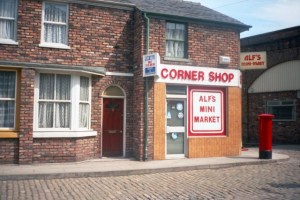
A journey of a thousand miles starts with your corner shop

My local corner-shop is under new management. It’s been there, 365 days a year, sunrise to 10 pm, for all the 21 years I’ve lived here. It has solved all my grocery emergencies… like my daughter’s sudden urges to bake cakes at 9pm and we’re out of eggs, or when a friend pops in for a cup tea and wrinkles his nose at the prospect of my soya milk, or when we’re sitting down to Christmas dinner with the extended family and I realise I’ve forgotten to buy the essential ingredient for brandy butter…

The new owners are eager to please. They’ve spruced the place up and stacked the shelves high with everything they think we’re ever likely to need. They are crestfallen if they don’t have something you want, and rush off to make a note to buy it next time.

There is one small space on those shelves, though. And I’ve got my eye on it.

Perhaps, as well as the usual cheap basic groceries, newspapers, sweets and booze, it could also sell Just Change tea – grown by indigenous people (who call themselves adivasis) in South India and traded community-to-community via volunteers like me. And honey made by a friend in the next street. And vegetables and flowers grown on the local allotments…

The new owner is skeptical, but doesn’t rule out the idea completely. His family has experience of running corner shops in various parts of Oxford from the multicultural, multi-social (to coin a phrase) Cowley Road to Blackbird Leys where, he said, “most people are on benefits”. But here, he has noticed, there is a mix of “professional people” who might be interested in fair trade tea and home-made honey, and “simple people” (his words) who just want the basics at the cheapest possible price.

But why should paying producers a fair price for their goods be something only professional people can afford to do? Why shouldn’t “simple people”, people on lower incomes here be able to pay “simple people” in other countries a reasonable price for producing their food?

That’s what Bomman, a member of the adivasi group that produces Just Change tea, felt when he saw his tea for sale in a German fair trade shop. The price was way beyond the means of ordinary working people. Bomman said, “This isn’t fair. People who want to buy our tea are our friends; they should be paying less, not more”. So Just Change developed a pricing policy based on what people could afford – above a sustainable minimum set by the producers themselves.

When Just Change producers met members of Marsh Farm Outreach (MFO), a community group on a Luton housing estate, they found they had much in common; the struggle to earn a living, to own their own homes… and their love of tea. MFO now distributes Just Change tea on the estate and beyond. They do it as an act of solidarity with the adivasis and to supplement both their own and the adivasis’ incomes.

So, with this precedent to inspire me, my new mission is to persuade my new neighbour to stock fairly traded and locally produced groceries. Obviously he can only do this if all his customers—professional and “simple”—feel not only that it’s important to pay a fair price for their food, but also that it’s affordable.

Then maybe one day, we’ll all have a sense of solidarity with our fellow workers whether they are on the local allotment or they’re a thousand miles away in a South Indian tea garden.

Wish me luck. And watch this space…

Photo: The Corner Shop – Coronation Street set (Elaine Champion) / CC BY-SA 2.0

Miracle

A few weeks ago, I had that moment that every woman over 50 dreads. I felt a small lump in my breast. Within 14 days of seeing my GP about it, I was in the John Radcliff Hospital where the receptionist had all my details ready. Within minutes I was seen by the duty nurse who did a check up and recommended an x-ray, ultrasound test and needle test.

I wondered how long I would have to wait for all that lot – and how much longer than that I would have to wait for the results. Uncertainty—I heard recently—is what humans fear almost more than the worst news.

But she told me to go back to the waiting room and within two hours, I had had all the tests—moving from one clinic to another down gleaming blue and white corridors, my details miraculously popping up—with the newest gleaning of information attached—in each new clinic, and finally back to the duty nurse who gave me the results then and there. Everything was absolutely fine.

This is a miracle.

Not that everything was fine (well, that too), but that I should have had access to this vast, efficient, clean, machinery so quickly and effortlessly, without having had to spend a penny more than my taxes.

Miraculous that the doctors, while delivering this life preserving service to a vast waiting room bustling with people, should be able to take the time to notice that I was terrified of the needle (my childhood reflex to run at the mention of the word is still only barely controlled) and stop and talk me through it calmly and soothingly (you hardly feel it, incidentally).

Miraculous that while waiting I could have a cup of tea in a clean, bright café staffed entirely by volunteers. And that despite offering us all this, the hospital staff and signboards kept apologising to us… for keeping us waiting.

I met a guy in India earlier this year who worked for an ambulance service there. There is no welfare state in India, so nothing is free, but if the injured person asked to be taken to a ‘public’ (government) hospital they charged them a lower rate than if they asked for a private one—the assumption being that nobody who could possibly afford private care would set foot in a public hospital. Despite some of the world’s best hospitals and doctors being in India, many fear that a stay in a public hospital will leave you sicker than when you went in.

Miraculous that I do not have to make a choice like that.

I cycled away from the main hospital, past the maternity ward and wondered if the blackbird that was decanting pure, mellifluous poetry into the afternoon sky was a descendant of the one I had heard at the same spot 18 years ago, waiting for my daughter to be born. Safely, cleanly. I cycled back to my office in the University where students are given loans to get a superb education. I cycled home through a council-maintained park full of flowers and more birdsong. And I thought to myself, what a wonderful world. If only everybody’s world was like this.

[Photo: Light at the end of the corridor by Jean-Ettienne Poirrier http://www.flickr.com/photos/jepoirrier/3597587304/]

Did you change the world today?

No? Are you sure?

Not when you woke up this morning between your Egyptian cotton sheets, shuffled on your Cornish sheepskin slippers, yawned, stretched and had a hot shower? Not when you poured your Ethiopian coffee, whitened with Devon milk and sweetened with  Malawian sugar? Not when you dressed and slipped your Made in Korea mobile phone, humming with  coltan from the Democratic Republic of Congo, into your Made in Bangladesh pocket? Not when you helped your neighbour with her dustbins, and put out your own recycling bin before starting your Korean-manufactured car, as its Malaysian rubber tyres turned, its Nigerian oil-based petroleum burned and the exhaust fumes drifted towards the sky?

All day you’ve been shifting atoms, raising and lowering temperatures, diverting money from one economy into another, altering the chemical composition of the air around you, causing people to have new thoughts, different emotions, higher or lower incomes…

But isn’t ‘changing the world’ about the big, meaningful changes? I hear you cry.

Yes, and each of the infinitesimally small changes you make every day is adding up… and if some of your actions trigger changes in the thoughts and actions of those around you, if they set in motion a chain of re-actions – as they well might, whether you know it or not – over your lifetime, the cumulative impact of your little changes on the world will be exponentially bigger and more meaningful.

For example, next time you reach out your hand towards a supermarket shelf, the particular pack of tea (or cotton wool, or spaghetti, or chili powder or condoms or wine) that you choose will provide a single piece of data which will contribute towards the supermarket’s decision about where to buy that product from in future and how much to pay for it. So your little action could help make the world of difference to some struggling farmer in a continent far away.

Yet a farmer who’s close enough for the tea leaves picked by her hands to be brewing in the cup that’s warming your hands, at this very moment.

You are, without doubt, changing the world. Change it wisely.

PS Tomorrow is World Fair Trade Day.

PPS Find out how Ambika, Tanya and Katie are changing the world – together.

The Haves and the Have Nots…worlds apart?

The life expectancy of one community is 83 years.  The life expectancy of another is ten years less. One community has high levels of educational attainment,  subsequently high incomes and no child poverty. Another has a high percentage of adults without qualifications, low incomes and high rates of child poverty.

You would imagine that I was talking about global inequality – Europe vs Africa say.  But I’m talking about a place where rich and poor live much closer together. So close, in fact, that the better off community built a wall to segregate itself from the more deprived community, and urged teachers to keep their children separate  in school.

So maybe it’s somewhere like Palestine? Or  perhaps apartheid South Africa? Actually, it’s my own home town of Oxford. Lovely, leafy, Labour-dominated Oxford. Ah, but yes… Oxford, suddenly we remember when the dreaming spires echoed with the sound of screaming tyres. The Oxford Haves still shudder at the mention of Blackbird Leys and assume that the comparatively low life expectancy there is because they are all murdering one other, high on crack cocaine, rather than because of a web of social and economic factors – including low income and low educational attainment –  each of which exacerbates the other. With demise of the car industry and the prevalence of high brow jobs  in Oxford, people are trapped in this web. On the other hand they have a much stronger sense of community and identity, than most of the Have neighbourhoods.  And just like the Haves they are mostly just families getting on with their lives, bringing up their kids, enjoying the odd evening in the pub, and hoping to grow old peacefully and comfortably. It is even the home of an award-winning choir.

Late one night recently, at a Cowley Road bus stop – one of the areas of Oxford where the Haves and the Have Nots live cheek by jowl, a thin young woman came up to me and said in lilting Irish traveler tones, “Excuse me, miss.” I waited for the inevitable request for spare change to get to the night shelter. But instead she said “Can I interest you in a poem?”  Pleasantly surprised, I said I would love one and she sat herself down beside me on the wall, opened an exercise book and read out loud, in clear, measured, confident voice, what turned out to be a pretty good poem about the Easter story. I felt it was well worth the two quid I paid her. She immediately crossed the road to the chip shop, with head held high.

Maybe she knew that a fellow traveller on the rather arty Cowley road was likely to be a fellow poetry enthusiast. Whatever the reason, by reading me her poetry she made me empathise with her rather than feel sympathy for her. Sympathy is an emotion which, when acted upon, provides a warm glow of satisfaction for the person feeling it, but can be demeaning for the person who is forced, through lack of alternatives, to receive it. While empathy implies a level of understanding, of identifying with their predicament. Sympathy is something you do to someone. Empathy is something you do with them.

Donating to charity, for example, is prompted by sympathy, and most donors expect to be thanked (and even admired) for their generosity. But buying fair trade is motivated by empathy and buyers presumably do not expect gratitude for paying the  fair price for their purchase.

Oxford’s  Cutteslowe wall demonstrates that even if their immediate neighbours are Have Nots, Haves may not be moved to feel empathy for them. How much more difficult, then, for them to feel it for people on the other side of the world. Thankfully, increasing numbers of people are choosing fair trade – so many that fair trade sales are bucking the depressing trend of the rest of the retail sector. So maybe there is hope that instead of Haves and Have Nots, we will all become Have A Bit Mores and Have A Bit Less But Enough.

It’s not about the money, money, money…

One pop song doth not a zeitgeist make, of course, but Jessie J’s track insisting that “it ain’t about the cha-ching cha-ching “, but that she just wants to make the world dance, does chime with a sentiment that is popping up in a number of fields lately, especially if for  ‘dance’ we read ‘co-operate’.

I’ve just been reading Pete Wallis’ hopefully soon-to-be-published book, Into the Heart of Restorative Justice. This kind of justice is not so much about the money (that was stolen or demanded in fines) but about communication, rising mutual empathy, co-operation and eventually healing for both the criminal and the person they have harmed. Restorative justice brings them together in a safe and neutral environment, overseen by a facilitator, so that they can seek to understand the feelings that caused or were caused by the crime – so that they can, quite literally, find the humanity in each other. Wallis describes how effective this process is for helping all those affected by the crime to recover from it and move on, and the high rate of success it has had in preventing re-offending compared to the adversarial, crime-and-punishment model of traditional criminal justice.

In economics, too, co-operation is becoming as respectable as competition and, believe it or not,  money is losing its monopoly of the starring role. Economist Noreena Hertz says that the self-serving, profit-obsessed “Gucci Capitalism”, as she calls it, that has dominated in the last few decades, led inexorably to the global debt crisis, which in turn has paved the way for broad acceptance of what she terms “Co-op Capitalism.” This replaces competition and the bottom line with collaboration and the community. In other words, the world is beginning to prefer a harmonious economic ‘dance’ of give and take in which we all have a part, rather than businesses treating us as a mere source of  money, money, money.

Profit, so long the unquestioned raison d’etre of business, is now increasingly being joined by two more bottom lines; people and planet. Giving a damn about what your industry does to people and to the planet is no longer shrugged off by all businesses as wishy washy nonsense, but is increasingly being accepted as common sense… because we’ve all seen what can happen to the global economy when profit is the sole motivating factor. And with India and China – whose economies strongly feature co-operative business models – on the up and up, who are we to argue?

But the preference for co-operation over competition is not new; as Professor Hertz points out, “Recent work in behavioural economics has confirmed that benevolence is not alien to human nature. In evolutionary biology we see that learning from others – sharing information with others – is the key to human success. Whilst recent findings in neuroscience alert us to the fact that we are most contented when helping others.”

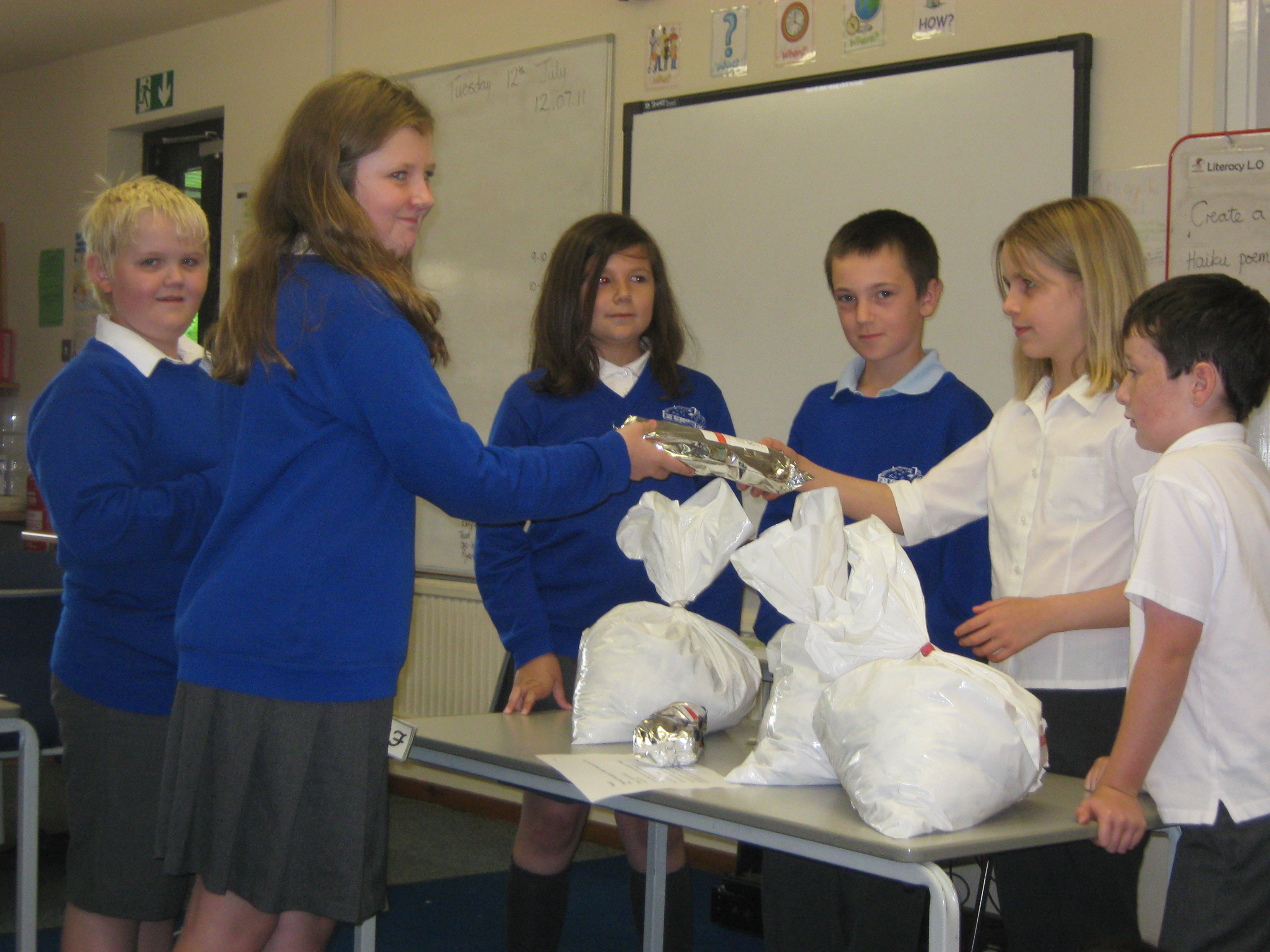
I’ve seen this in practice when, as a volunteer for Just Change, I run school workshops to stimulate discussions among young people about trade justice. In round one, the group is asked to improvise a role-play depicting conventional trade; ie the object of the exercise is for each group to make as much money as possible for themselves. In this scenario, there is always much rowdy bantering and bartering. At the end, the shoppers are poorer than when they started, though not as poor the tea growers who stay poor, while the shopkeepers always get richer. Everybody, except the shopkeepers of course, says they feel rotten at the end of the round.

In round two, they replay the roles, but this time it is everyone’s responsibility to ensure that everyone has enough money for their needs, which is the principle on which Just Change operates. This time, unsurprisingly, all three groups say they feel satisfied with the amount of money they are left with at the end. But I have noticed something else; in round 2 the kids always treat each other with respect and kindness rather than aggression – and the general atmosphere is always much quieter and gentler.

Peter Wallis says that “normally well grounded, sober practitioners” are so moved by the transformation that takes place in restorative justice meetings that they “start using mystical, even religious language” to describe it. I felt the same after these Just Change workshops. I felt that I was witnessing a purer, more innocent and more real side of human nature emerging.

Stan Thakaekara, one of the founders of Just Change, asks “Is [a] profit-driven market economy inevitable? Are justice and human dignity no longer relevant? Are there no other choices and options?” Through the growth of the Just Change movement in India, in which tens of thousands of families trade on Just Change principles, he has helped to prove beyond doubt that there are other options.

And every time we do our grocery shopping, most of us have options too. Choosing fairly traded products, or buying from the Co-op (or a co-operatively run store like Waitrose or John Lewis) is more than paying lip service to a good cause. It is a profound political and economic act. It is a taking step in the dance of global economic co-operation, and helping to restore a bit of economic justice by recognising and responding to the humanity in those who produce what we buy. Ok, so sometimes it might cost a little more… but it’s not about the money, money, money. Ain’t about the (ha!) cha-ching cha-ching. Ain’t about the (yeah!) ba-bling ba-bling, Wanna make the world dance, Forget about the price tag.

_________________________________________________________________________________________

Jessie J featuring B.oB, Price Tag – http://youtu.be/qMxX-QOV9tI
Restorative Justice – http://en.wikipedia.org/wiki/Restorative_justice
Just Change – www.justchangeuk.org
Co-op Capitalism – http://www.uk.coop/coopcapitalism

Should Fair Trade be a matter of choice?

Alongside the selection of Fairtrade coffee at the tuck shop in a certain Fairtrade certified institution in Oxford, stands several jars of Nescafé. And these particular jars do not contain the 1% of Nestlé’s coffee products which are Fairtrade certified.  Kudos to Nestlé for that 1%, but the company  “has not changed its policies and practices in any other area, most notably that of the unethical marketing of baby milk in southern countries,” (People and Planet). So I asked the lady behind the counter what lay behind this curious choice of shelf-fellows;  “Well, you’ve got to give people a choice, haven’t you?”  she replied, somewhat tetchily.

At first I was stymied. It’s a good question. Aren’t you morally obligated to give people the choice about what to buy? Isn’t it up to them to decide if Fairtrade is more important to them than saving pennies or taste preferences?  But the more I thought about it, the more certain I felt that the answer was No.

The price that the Fairtrade mark has paid for becoming almost mainstream, is that many subconsciously see it as something like a ‘brand’, and we take it for granted that we must be offered a wide choice of brands. We  forget that the Fairtrade label is a mark of justice, that it’s about ethics not aesthetics.

Offering people a choice between brands, or between  full and low fat is a different matter. These choices affect only the buyer him- or herself. Offering them a choice between organic and not organic, or offering a plastic carrier bag is more controversial, because you are offering them the choice to add more pollution to our already struggling planet, and that’s something that will affect all of us – including the buyer – in the long-run.

But when you offer one person the choice of buying something that is not fairly traded you are, in effect, offering them the choice of depriving another person – the producer – of a whole host of choices. While the buyer is being given a choice of what to buy in the tuck shop, the producer – by possibly being paid less than a fair price for his or her (often backbreaking) labour – may be being deprived of the choice of putting food on the table for their family, the choice of paying for adequate housing or medicine, or the choice of sending their children to school…

So no, I don’t believe there is a moral obligation to offer people that particular choice. On the contrary, I think it is our moral obligation to remove that choice altogether, just as we would want to remove the choice of buying the products of child or slave labour. Indeed, some current trading practices that we unwittingly participate in make producers little more than slaves.

Of course,  a product not being Fairtrade certified does not automatically mean that it was unfairly traded, but there is always a risk that it was. So until the choice has been removed altogether, perhaps people who are considering which coffee to choose would find the decision a little easier if we asked Nestlé (et al) to clearly label the remaining 99% of their coffee ‘Not Fairly Traded”.

An Evening of Indian Spices

Saturday 22nd October from 6-8pm at The Friends Meeting House, 43 St Giles, Oxford  OX1 3LW

A range of Indian spices in a handmade basket

Just Change tea grown by a tribal co-operative in Gudalur, in the Nilgiri Hills, South India has been available in Oxford for some time. Now we are delighted to announce the arrival of Just Change Spices – including cardamom, chilli powder, turmeric, peppercorns, cumin, coriander, cinnamon, cloves plus ground ginger.

There will be a cookery demonstration to give you some ideas about how to use the spices in curries, masala chai and hot mulled apple juice – which you are welcome to taste. Gift baskets and loose packs of individual spices will be available to buy, at a fair price for the producers and for you. Just Change tea will also be available to taste and buy.

Dr Alex Nicholls MBA, lecturer social entrepreneurship at University of Oxford’s Said Business School, will discuss the benefits and challenges of the revolutionary Just Change trading system. Dr Nicholls is co-author of a major research book on Fair Trade (with Charlotte Opal, Sage, 2005) and the editor of a collection of key papers on social entrepreneurship (Oxford University Press, 2008).

A word from the producers:

“Here in Gudalur, putting together the JCUK spices pack was fun and exciting, as this time we were able to purchase our goods directly from producers! Peppercorns, cardamom and of course, tea, are from our members in Gudalur. Chillies and coriander are from our partner, Aharam, whose farmers are around Madurai, in Tamilnadu. Turmeric is from Organic farmers in the Sittilingi Valley of Tamilnadu. All these were processed into powders by women members of BVM branch of the Just Change Company in Kerala. The adivasi soap unit, in Gudalur, took a few days off soap making, to pack and parcel the spices to send to JCUK. We are glad that they were a runaway success, and look forward to sending you more spices next year! We have sourced some handmade baskets as well!”

Places are limited so please book early to avoid disappointment.  To book email justchangeoxford@gmail.com or call 07773 949 787