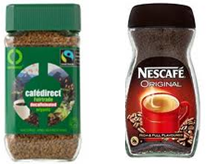
 Alongside the selection of Fairtrade coffee at the tuck shop in a certain Fairtrade certified institution in Oxford, stands several jars of Nescafé. And these particular jars do not contain the 1% of Nestlé’s coffee products which are Fairtrade certified. Kudos to Nestlé for that 1%, but the company “has not changed its policies and practices in any other area, most notably that of the unethical marketing of baby milk in southern countries,” (People and Planet). So I asked the lady behind the counter what lay behind this curious choice of shelf-fellows; “Well, you’ve got to give people a choice, haven’t you?” she replied, somewhat tetchily.
At first I was stymied. It’s a good question. Aren’t you morally obligated to give people the choice about what to buy? Isn’t it up to them to decide if Fairtrade is more important to them than saving pennies or taste preferences? But the more I thought about it, the more certain I felt that the answer was No.
The price that the Fairtrade mark has paid for becoming almost mainstream, is that many subconsciously see it as something like a ‘brand’, and we take it for granted that we must be offered a wide choice of brands. We forget that the Fairtrade label is a mark of justice, that it’s about ethics not aesthetics.
Offering people a choice between brands, or between full and low fat is a different matter. These choices affect only the buyer him- or herself. Offering them a choice between organic and not organic, or offering a plastic carrier bag is more controversial, because you are offering them the choice to add more pollution to our already struggling planet, and that’s something that will affect all of us – including the buyer – in the long-run.
But when you offer one person the choice of buying something that is not fairly traded you are, in effect, offering them the choice of depriving another person – the producer – of a whole host of choices. While the buyer is being given a choice of what to buy in the tuck shop, the producer – by possibly being paid less than a fair price for his or her (often backbreaking) labour – may be being deprived of the choice of putting food on the table for their family, the choice of paying for adequate housing or medicine, or the choice of sending their children to school…
So no, I don’t believe there is a moral obligation to offer people that particular choice. On the contrary, I think it is our moral obligation to remove that choice altogether, just as we would want to remove the choice of buying the products of child or slave labour. Indeed, some current trading practices that we unwittingly participate in make producers little more than slaves.
Of course, a product not being Fairtrade certified does not automatically mean that it was unfairly traded, but there is always a risk that it was. So until the choice has been removed altogether, perhaps people who are considering which coffee to choose would find the decision a little easier if we asked Nestlé (et al) to clearly label the remaining 99% of their coffee ‘Not Fairly Traded”.

 Sabita Banerji